by Ray Levato
“The welfare of America is closely bound up with the welfare of all mankind.”
– Gen. Marquis de Lafayette
This year marks the 200th anniversary of the completion of one of the world’s great engineering marvels of its time: the 363-mile-long Erie Canal. It also marks the 200th anniversary of one of the last surviving heroes of the American Revolution’s visit to the Finger Lakes.
But let’s back up for a moment.
In 1775, young French nobleman Gilbert du Motier Marquis de Lafayette traveled across the Atlantic Ocean to lend his support to the fledgling 13 colonies in their quest for liberty from the king of England. Lafayette was trained from a young age in the family’s long, distinguished military tradition and was commissioned an officer by the age of 14. He became interested in the American colonies’ revolt against the British, whom he blamed for his father’s death in the Seven Years’ War.

Lafayette soon rose through the ranks of the Continental Army and became a key aide to Gen. George Washington. He also lobbied France to give key support to the American Revolution. Lafayette distinguished himself on the battlefield at Brandywine in Pennsylvania, where he was wounded in the leg.

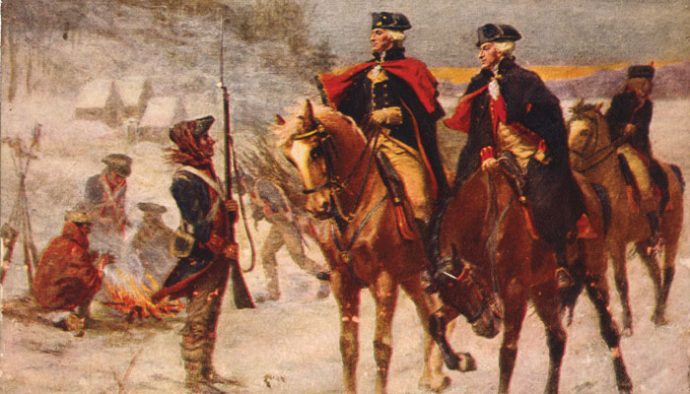
Lafayette was with Washington at Valley Forge, PA in the harsh winter of 1777-78. Other battles ensued, and Lafayette would eventually be awarded the rank of major general of the Continental Army. He played an important role in the war’s decisive victory in the battle at Yorktown in 1781.
Fast forward to 1824.
Lafayette, now an old man who for decades played various roles in French politics, returned to the U.S. for a year-long farewell tour at the invitation of President James Monroe. It would coincide with the 50th anniversary of the start of Revolutionary War in 1825. Lafayette was accompanied by his son, George Washington Lafayette, whom he named in honor of his old friend. Lafayette was the last surviving major general of the Revolutionary War. A crowd of about 80,000 people turned out for a welcoming parade on August 16, 1824 in New York City.
But the 13 original states had grown to two dozen. Now age 67, Lafayette began an ambitious journey to visit all 24 states, which eventually brought him to Buffalo and the newly opened Erie Canal. The planned trip across New York by water afforded him a well-deserved rest from the arduous journey over thousands of miles of dirt roads by carriage.
But fortuitously there would be a change of plans that brought Lafayette to the Finger Lakes. He received a letter in Buffalo from James Rees of Geneva, who invited the aging general to take a side trip to his Ontario County city. So, Lafayette left the canal in the then-small village of Rochesterville and traveled again by carriage on the old Indian trail to Canandaigua and Geneva.
At One Exchange Street in downtown Rochester, a memorial plaque marks the exact spot where he spoke. It says: “On June 7, 1825, Lafayette met Revolutionary War veterans at Silvius Hoard’s Tavern.”
Lafayette’s relationship to Rees (1763-1851) dates to the early days of the Revolutionary War. Rees was the confidential clerk to Robert Morris, the wealthy Philadelphia businessman who is considered the “financier of the American Revolution.” It’s thought Lafayette may have witnessed negotiations between Morris and George Washington.
Rees first came to the Finger Lakes in 1797 when he was secretary to the Commissioner who negotiated the historic treaty with the Senecas at Big Tree in Geneseo.
Longtime Seneca County historian Walter Gable wrote of Lafayette’s visit to Geneva, June 8, 1825: “Lafayette was riding in a carriage drawn by six horses. They stopped under a balsam poplar tree on Bean’s Hill in Geneva. It was there that Lafayette was able to catch his first glimpse of the majestic Seneca Lake. A signal gun’s firing announced Lafayette’s arrival, and nearly a dozen military companies marched to the tree all in full uniform. It is believed that as many as 2,000 people greeted Lafayette. After his reception at the tree, the general visited a nearby house that had been built in 1820. It became the Lafayette Inn for many years.”
Gen. Lafayette’s party left Geneva at 1 p.m., and similar grand welcoming ceremonies were held in Waterloo, Auburn and Skaneateles that afternoon and evening. LaFayette Park in Waterloo is one of more than 150 places – cities, towns, parks and public squares – named after him.
Gable wrote Lafayette arrived in Auburn at 4 p.m. “where they were greeted by the firing of 24 cannons. The welcoming party included the young William Henry Seward and the festivities included a dinner for 200 invited guests and then a ball that lasted until 11 p.m.”
Lafayette set out for Syracuse that night to rejoin the Erie Canal and his journey to Boston, where he would help lay the cornerstone of a new monument to mark the 50th anniversary of the pivotal Battle of Bunker Hill.
During his demanding but enjoyable 14-month tour, Lafayette visited more than 120 cities and was treated to a hero’s welcome and festive celebrations everywhere he went. Besides president Monroe, Lafayette also met with three other Founding Fathers still living at the time: former presidents Thomas Jefferson, James Madison and John Adams.
Lafayette celebrated his 68th birthday in the nation’s capital in September 1825 before returning to France onboard a newly built American warship – the USS Brandywine, named in honor of his heroic service in that Revolutionary War battle – courtesy of the new president John Quincy Adams.
Lafayette died May 20, 1834 at the age of 76. His historic trip in the United States was chronicled in a two-volume memoir published in 1829 by his private secretary Auguste Levasseur, and was translated into English, Lafayette in America in 1824 and 1825: Journal of a Voyage to the United States.
Biographer L.G. Unger wrote Lafayette was “the last leader and hero at the nation’s defining moment.”
Ray Levato is a retired reporter/anchorman at WHEC-TV, Ch. 10 in Rochester.