



story and photos by Jennifer Morrisey
As the farms in the Finger Lakes begin to stir back to life, barn doors are flung open, pastures turn green again and, with the arrival of new farm babies, cows and goats are coming back into milk. For generations, this was the season when simple fresh cheeses appeared in farm kitchens – the kind that could be made in an afternoon and eaten that same day. Across the region, farm families found small ways to use the first milk of spring, turning it into butter, yogurt and fresh cheeses that were as easy to make as they were to enjoy.
I was first introduced to farmer’s cheese years ago by my cousin. For a time, she kept a small herd of milk goats at her homestead. Milking was part of her day, and that steady supply of fresh milk rarely went to waste. She made goat milk soap, yogurt and simple cheeses like this farmer’s cheese, the kind that could be stirred together on the stove and enjoyed the very same day. If I had ever been intimidated by the idea of trying my hand at cheesemaking, watching her work with milk so casually made the entire process feel less like a special skill and more like an ordinary part of home life.
But you don’t need a Jersey cow or a herd of goats in the backyard to try your hand at cheesemaking. With nothing more than milk, a splash of vinegar, pinch of salt and a little patience, you can make a soft, fresh farmer’s cheese right in your own kitchen. Most store-bought milk will work, but be sure to choose regular pasteurized milk rather than ultra-pasteurized. Ultra-pasteurized milk is heated to a higher temperature and often does not form curds properly, so it is best avoided for cheesemaking.

For this recipe, whole milk works best. The higher fat content helps produce tender, flavorful curds and a higher cheese yield. While my cousin made her farmer’s cheese with goat’s milk, I personally prefer the flavor and texture of cow’s milk for this particular recipe.
Lower-fat milks, such as skim or 1 percent, will produce fewer curds and a noticeably drier cheese. Plant-based milk alternatives like almond, oat, or soy do not contain the proteins needed for the milk to properly separate into curds and whey, so they will not work for this recipe.
When possible, choose local, good-quality whole milk. I find that local dairy milk produces especially rich, flavorful curds. My favorite spots near me for picking up milk are Pittsford Farms Dairy and Sweet Acres Creamery.
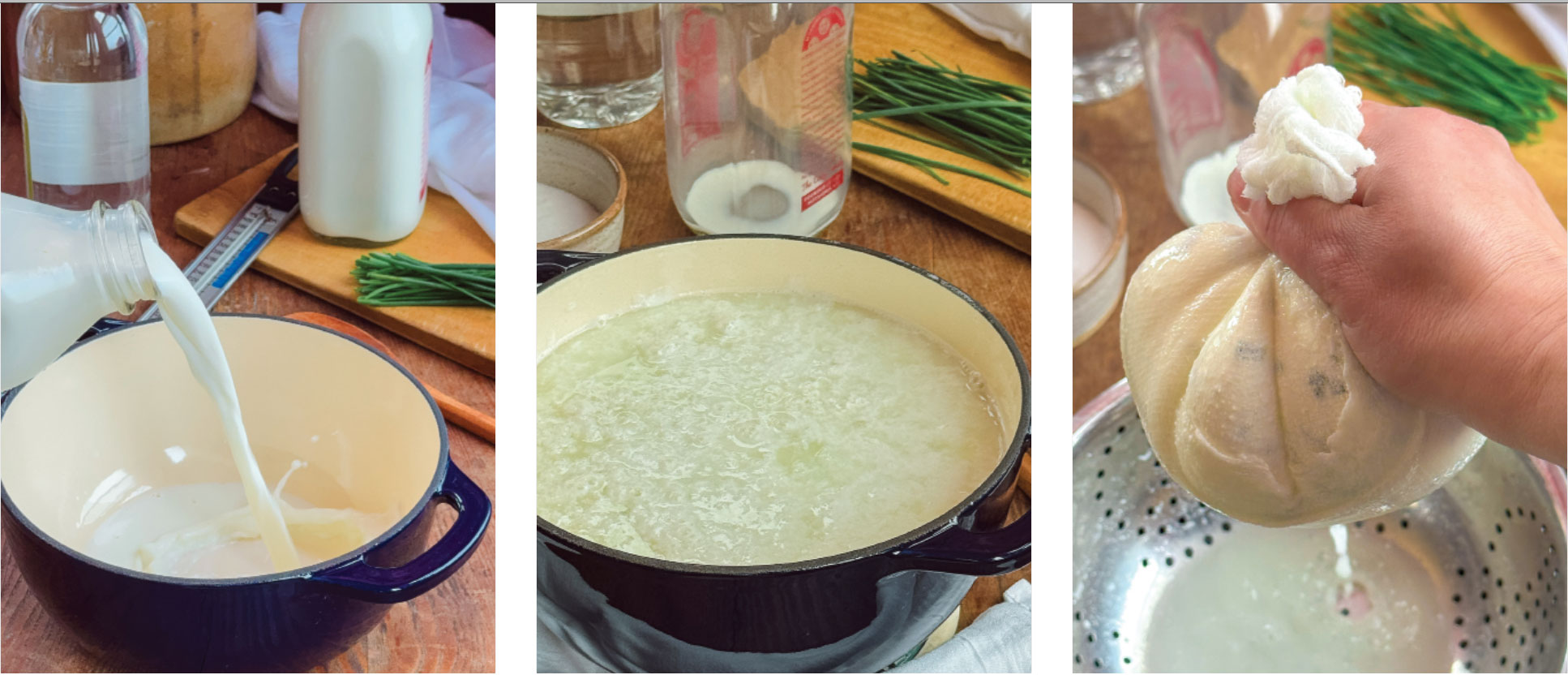
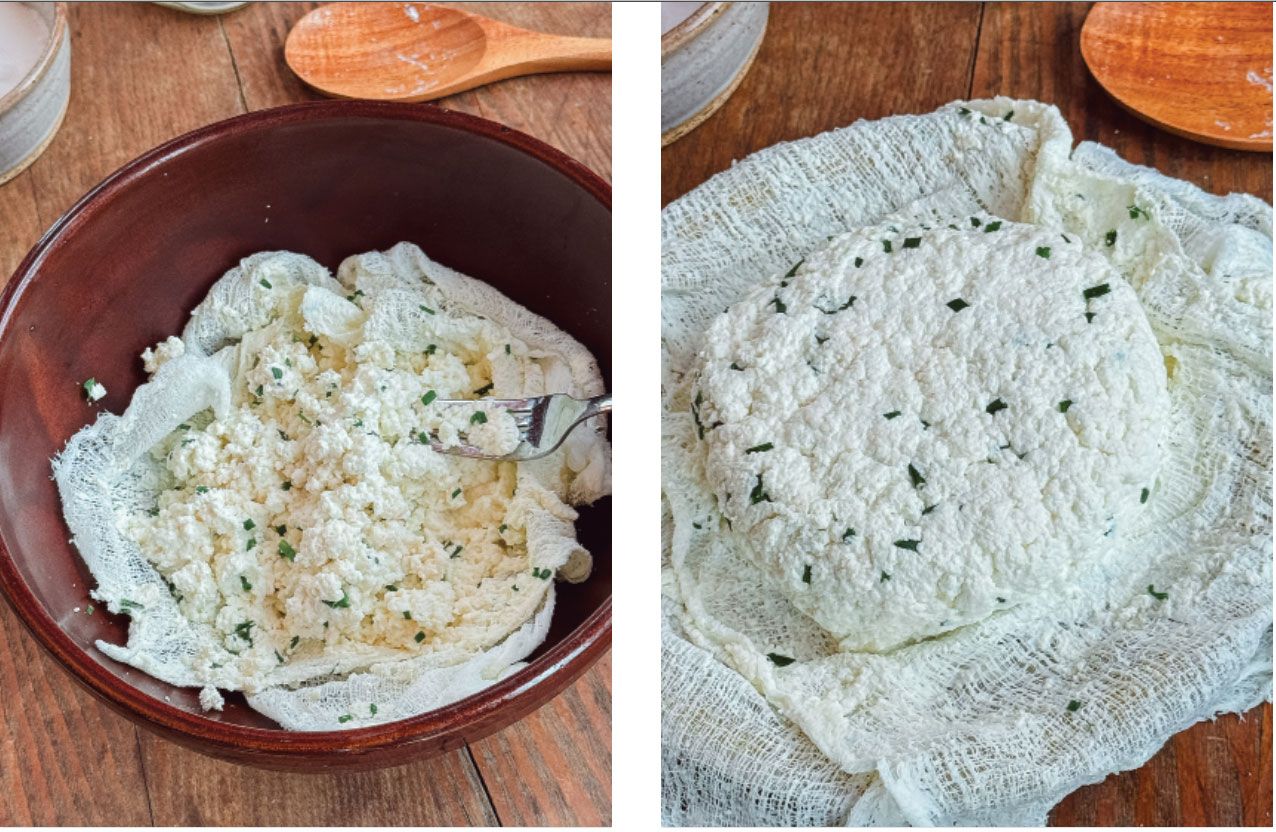
The process is incredibly simple: Heat the milk to just below boiling, when steam begins to rise from the surface and small bubbles form around the edges of the pot. Next, stir in the vinegar and watch as the curds separate from the whey. Within moments, the milk transforms, with soft white curds floating in pale golden whey. After straining, you are left with tender cheese ready to enjoy within hours. Even beginners will find that making cheese can be simple and rewarding.
As the days grow warmer and longer in the Finger Lakes, many local cooks like to stir in their own seasonal touches, folding in chopped chives, fresh dill or a handful of garden basil when summer is in full swing. My favorite early spring addition is foraged wild garlic chives. In June, topping this cheese with a spoonful of crushed strawberries or a drizzle of honey adds a subtle sweetness, making it a lovely breakfast cheese. This simple cheese allows endless experimentation, welcoming whatever the garden or hedgerow has to offer.
Farmer’s cheese should be stored in an airtight container in the refrigerator and is best enjoyed within four to five days. If the curds begin to dry out, stir in a spoonful of the reserved whey or a splash of milk. Because it is a fresh cheese with no preservatives, it should be eaten fairly quickly.


